


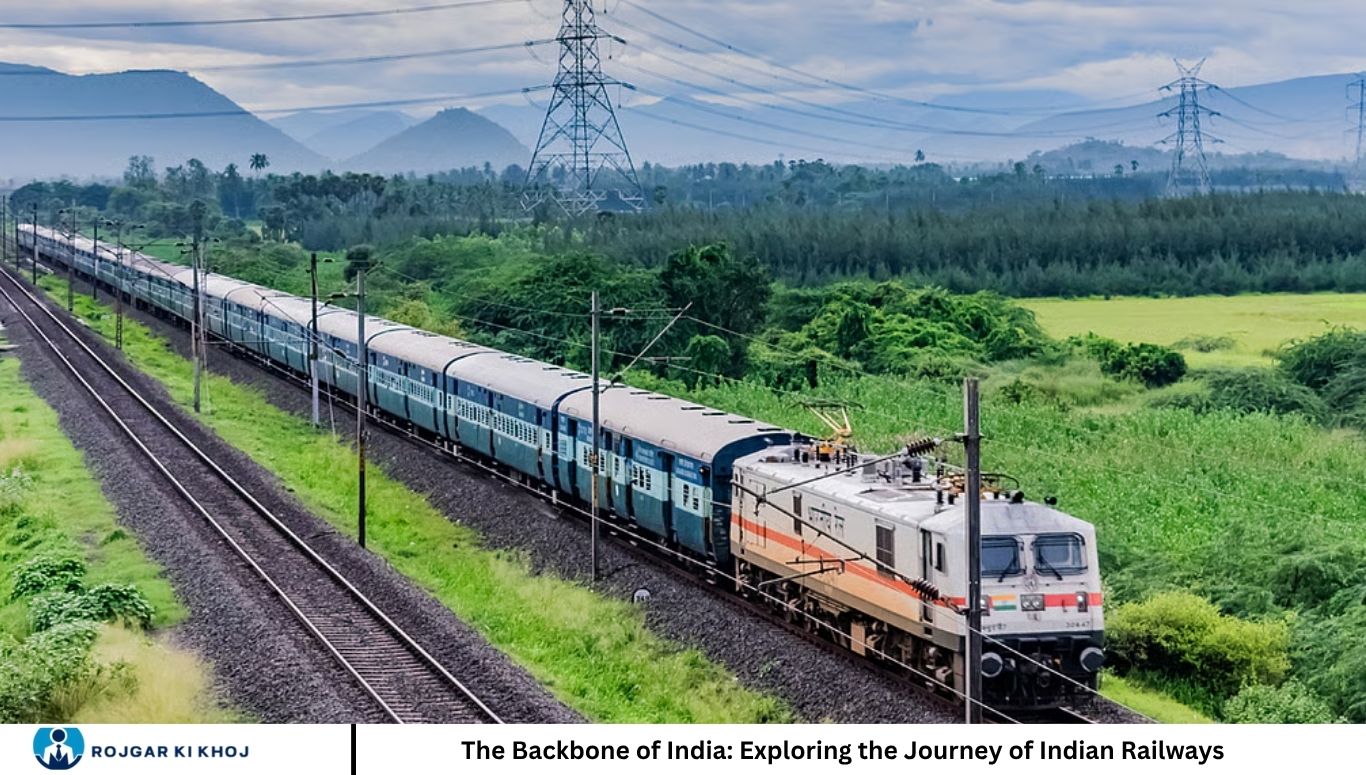
Nation whose diversity spans geography, language and culture, the railway network stands as one of the strongest threads binding it together. Indian Railways (IR) is not just a transport system but a social institution. From colonial tracks laid over a century ago to modern high-speed ambitions, Indian Railways has transformed in ways few other public utilities have. This article offers a deep dive into its history, structure, operations, challenges and future, giving you an inside view of one of the world’s largest rail systems.
A Brief History of Indian Railways
The story of Indian Railways begins in the mid-19th century. The first passenger train ran between Bori Bunder (Mumbai) and Thane on 16 April 1853, covering a distance of around 34 km.
In the south, the first line opened on 1 July 1856 between Vyasarpadi Jeeva Nilayam and Walajah Road. From those modest beginnings, by the 1880s the railway system had grown to thousands of miles of line. Over time, Indian Railways developed into a multi-gauge and multi-traction network. Broad gauge, meter gauge and narrow gauge lines served different regions. Post-independence, the system was integrated, expanded and modernised, becoming one of the largest networks under a single management in the world.
Scale & Significance – How Big is Indian Railways?
When you look at the numbers, Indian Railways is staggering in its scale.
- It is often described as the world’s fourth-largest railway network by size, following the US, China and Russia.
- It covers tens of thousands of kilometres of track, linking nearly every corner of India.
- It operates thousands of passenger and freight trains every day across thousands of stations.
- It is also a massive employer, and a key component of India’s infrastructure and economy.
The sheer reach and impact of Indian Railways means that virtually every region, whether remote hill-station or major metropolis, depends in some way on its services.
Structure & Organisation
Indian Railways is managed by the Railway Board under the Ministry of Railways, Government of India.
Zonal & Divisional Setup
The network is divided into zones, each further broken down into divisions. This enables local management of operations, maintenance and passenger services.
Rolling Stock & Infrastructure
- Indian Railways owns locomotives (electric and diesel), coaches, wagons and stations. For example, as at a recent date the network included well over 300,000 freight wagons, tens of thousands of passenger coaches, and thousands of locomotives.
- Coach manufacturing units (such as the Rail Coach Factory, Kapurthala) and locomotive works help support the internal supply chain.
Multiple Gauges & Electrification
- Historically, IR operated broad gauge (1,676 mm), meter gauge (1,000 mm) and narrow gauge (762/610 mm) lines.
- Over time there has been a strong push for gauge conversion (to broad gauge) and electrification of key lines.
Passenger Services & Freight – Dual Missions
Passenger Services
Passenger transport is a central mission. Millions of Indians rely on trains daily for inter-city travel, commuting and remote access. The network includes many classes of trains: express, super-fast, local suburban services, and even luxury tourist trains. Because of high demand, services span from basic seating to air-conditioned coaches, sleeper classes, and premium trains.
Freight Operations
Equally important is freight: moving bulk commodities (coal, steel, cement, fertilizer, etc) over long distances. For many industries, the rail system is the preferred bulk carrier. Freight operations also help generate significant revenue for the system, balancing the social obligation of passenger services with commercial imperatives.
Modernisation & Innovation
Indian Railways does not rest on its legacy — it is actively modernising.
- The government has allowed 100 % foreign direct investment (FDI) in the railway sector to accelerate infrastructure growth.
- Projects such as dedicated freight corridors, high-speed corridors, gauge conversion, station redevelopment, electrification are underway.
- Digital transformation: e-ticketing systems, improved passenger information systems, safety upgrades.
These efforts not only upgrade capacity and quality but also aim to improve passenger experience, efficiency and safety.
Challenges Facing Indian Railways
Despite the achievements, there are notable challenges:
- Capacity constraints: With huge demand from both passengers and freight, many routes are congested.
- Speed and infrastructure gaps: Average speeds for many trains remain modest compared to global standards.
- Safety and maintenance demands: Vast network means ongoing upkeep, track renewal, signal upgrades and staff training.
- Balancing commercial viability and social obligation: Passenger services often operate at subsidised fares; making services financially sustainable remains difficult.
- Land acquisition, gauge conversion and environmental concerns: Projects may face delays due to regulatory or terrain challenges.
The Future of Indian Railways
Looking ahead, there are several key themes shaping the next decade:
High-Speed Rail & Smart Corridors
India’s ambition includes high-speed rail corridors (such as the Mumbai–Ahmedabad High‑Speed Rail Corridor) and upgraded routes aiming for greater speeds, comfort and connectivity.
Complete Electrification & Green Transition
One major goal is to electrify the entire broad gauge network, reducing dependence on fossil fuel locomotives and lowering carbon footprint.
Digitalisation & Passenger-First Services
From real-time tracking and smart stations to digital ticketing and improved onboard amenities, IR is aiming to raise the standard of travel experience.
Freight Optimisation & Supply-Chain Integration
With logistics becoming more interlinked, Indian Railways will play a pivotal role in India’s growth story — efficient freight corridors, multi-modal connectivity, and integration with ports and highways are key.
Why Indian Railways Matters – Socio-Economic Impact
Beyond trains and tracks, Indian Railways underpins socio-economic development in multiple ways:
- It connects remote regions with major cities, boosting access to education, healthcare, employment and markets.
- It supports industry by transporting raw materials and finished goods across the country, enabling economies of scale and regional development.
- It provides employment – directly through its workforce and indirectly through ancillary businesses (vendors, service providers, logistics).
- It fosters national integration: with a network that spans wide regional and cultural divides, it helps bind the country together physically and symbolically.
Key Facts & Figures (Snapshot)
- The network is one of the largest in the world under one management.
- It handles billions of passengers yearly and millions of tonnes of freight.
- It is a major employer and infrastructure entity in India.
- Modernisation expenditure is high, reflecting the scale of investment needed.
Frequently Asked Questions
What is Indian Railways and when was it established
Indian Railways is the national railway system of India owned and operated by the Government of India under the Ministry of Railways It was officially established in 1853 when the first passenger train ran between Mumbai and Thane
How large is the Indian Railways network
Indian Railways operates one of the world’s largest railway networks spanning over 68000 kilometers and connecting more than 7000 stations across the country
What are the main types of trains operated by Indian Railways
The main types include passenger trains express and superfast trains Rajdhani and Shatabdi Express luxury tourist trains freight trains and suburban trains in metropolitan cities
How can passengers book tickets on Indian Railways
Tickets can be booked online through the IRCTC website or mobile app as well as at railway reservation counters and authorized travel agents across India
What modernization projects are being implemented by Indian Railways
Major initiatives include 100 percent electrification high speed rail corridors station redevelopment digital ticketing dedicated freight corridors and smart train services for improved safety and efficiency
Conclusion
Indian Railways is far more than a transportation network. It is an enduring symbol of connectivity, growth, and national ambition. As India moves into the future, with urbanisation, industrialisation and mobility demands rising, the railways must continue evolving—expanding capacity, modernising infrastructure, enhancing safety and improving passenger experience. The challenges are significant, but so are the rewards: a robust, efficient rail system will accelerate economic growth, reduce carbon emissions, enrich lives and connect people.For travellers, policymakers, industry players and citizens alike, understanding Indian Railways is to understand a vital part of India itself.