


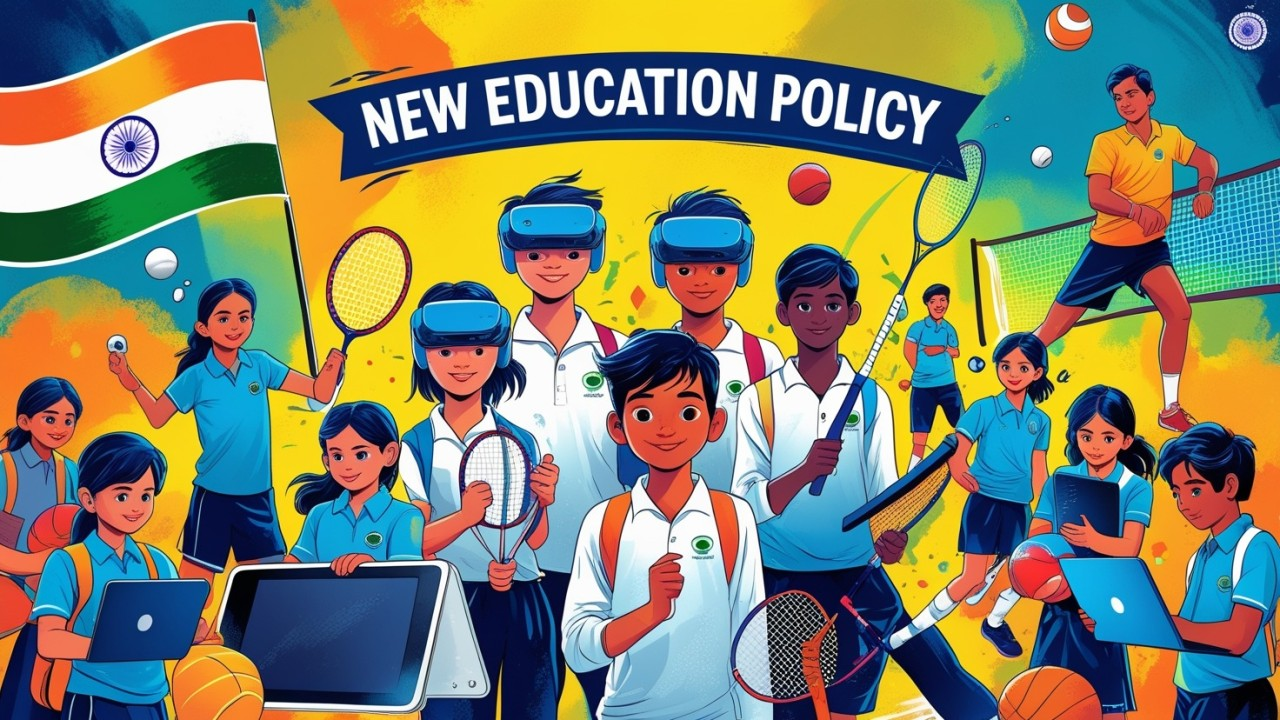
Education plays a vital role in shaping the future of a nation. Recognizing the need for a modern, flexible, and skill-oriented education system, India has continued implementing reforms under the New Education Policy (NEP). The New Education Policy 2024 builds upon the vision of NEP 2020 and aims to make education more inclusive, innovative, and relevant to the demands of the 21st century. It focuses on holistic development, digital learning, vocational education, critical thinking, and multidisciplinary learning.
The policy seeks to transform traditional learning methods and prepare students for a rapidly changing global environment. By integrating technology, improving teacher training, and emphasizing practical knowledge, NEP 2024 aims to create a future-ready generation equipped with both academic excellence and life skills.
What is the New Education Policy 2024?
The New Education Policy 2024 is an extension and implementation phase of India’s educational reforms initiated through NEP 2020. It focuses on improving the quality of education, enhancing accessibility, promoting innovation, and creating a learner-centered educational framework. The policy encourages flexibility in subject selection, multidisciplinary education, vocational training, and the use of modern technology in teaching and learning.
The primary objective is to move away from rote memorization and promote conceptual understanding, creativity, problem-solving skills, and critical thinking among students.
Key Features of the New Education Policy 2024
Introduction of the 5+3+3+4 Structure
One of the most significant reforms is the replacement of the traditional 10+2 education structure with a 5+3+3+4 system. This structure is designed according to the cognitive development stages of children.
The structure includes:
- Foundational Stage (Ages 3-8): Three years of preschool and Grades 1-2.
- Preparatory Stage (Ages 8-11): Grades 3-5.
- Middle Stage (Ages 11-14): Grades 6-8.
- Secondary Stage (Ages 14-18): Grades 9-12.
This approach ensures age-appropriate learning and promotes the overall development of children from an early stage.
Focus on Foundational Literacy and Numeracy
NEP 2024 places special emphasis on ensuring that every child achieves basic reading, writing, and mathematical skills. Foundational literacy and numeracy are considered essential for future academic success. Schools are encouraged to adopt activity-based and experiential learning methods to strengthen these core competencies.
Holistic and Multidisciplinary Education
The policy promotes a multidisciplinary approach where students are no longer restricted to specific streams such as Science, Commerce, or Arts. Students can choose subjects based on their interests and career goals. For example, a student can study Physics along with Music or Mathematics with Fine Arts. This flexibility encourages creativity and broadens learning opportunities.
Integration of Technology in Education
Technology has become a central pillar of modern education. NEP 2024 emphasizes digital learning, online resources, virtual classrooms, and smart educational tools. The policy aims to bridge the gap between urban and rural education through digital infrastructure and accessible learning platforms.
The use of educational technology also helps teachers deliver personalized learning experiences and enables students to learn at their own pace.
Vocational Education and Skill Development
A major highlight of NEP 2024 is the introduction of vocational training from Grade 6 onwards. Students are exposed to practical skills such as coding, agriculture, carpentry, entrepreneurship, arts, and other professional fields. The objective is to make students job-ready and reduce the gap between academic learning and industry requirements.
Vocational education helps students gain real-world experience and develop employability skills from an early age.
Emphasis on Critical Thinking and Creativity
Traditional education systems often focus heavily on memorization. NEP 2024 encourages analytical thinking, creativity, innovation, and problem-solving abilities. Students are encouraged to ask questions, conduct research, and participate in experiential learning activities.
This shift aims to create independent thinkers capable of addressing modern-day challenges.
Improved Assessment Methods
The policy introduces competency-based assessments instead of purely exam-focused evaluation. The focus is on understanding concepts rather than memorizing information. Regular formative assessments help track student progress and reduce examination stress.
Board examinations are also being redesigned to test application-based knowledge and practical understanding.
Teacher Training and Professional Development
Teachers are the foundation of any successful education system. NEP 2024 emphasizes continuous teacher training and professional development programs. Educators are encouraged to adopt innovative teaching methodologies, technology integration, and student-centered learning approaches.
Well-trained teachers contribute significantly to improving educational outcomes.
Promotion of Regional Languages
The policy encourages the use of mother tongue or regional languages as the medium of instruction during the early years of education. Research suggests that children learn concepts more effectively when taught in their native language.
At the same time, students are encouraged to learn multiple languages to enhance communication and global competitiveness.
Reforms in Higher Education
NEP 2024 introduces several reforms in higher education institutions. Universities are encouraged to become multidisciplinary centers of learning and research. The policy promotes flexibility in course selection, multiple entry and exit options, academic credit transfer systems, and increased focus on research and innovation.
These reforms aim to make higher education more accessible and globally competitive.
Benefits of the New Education Policy 2024
Better Learning Outcomes
The focus on conceptual understanding and skill development helps students achieve better academic performance and practical competence.
Enhanced Employability
Vocational training and industry-relevant skills prepare students for future careers and entrepreneurship opportunities.
Reduced Academic Pressure
Flexible curricula and competency-based assessments reduce stress associated with traditional examinations.
Inclusive Education
The policy aims to provide equal educational opportunities to students from diverse backgrounds, including rural and disadvantaged communities.
Global Competitiveness
The integration of technology, research, innovation, and multidisciplinary learning aligns India’s education system with international standards.
Challenges in Implementing NEP 2024
Despite its ambitious vision, the successful implementation of NEP 2024 faces several challenges.
Infrastructure Development
Many schools, especially in rural areas, lack adequate infrastructure and digital resources required for modern learning methods.
Teacher Training Requirements
A large-scale transformation requires extensive teacher training and capacity building programs.
Funding and Resource Allocation
Implementing educational reforms on a national scale requires substantial financial investment and efficient resource management.
Digital Divide
Access to internet connectivity and digital devices remains a challenge in many parts of the country. Bridging this gap is essential for equitable education.
Impact of NEP 2024 on Students
Students benefit significantly from the policy’s learner-centric approach. They gain greater flexibility in choosing subjects, access to practical learning experiences, improved digital literacy, and opportunities to develop critical thinking skills. The policy encourages lifelong learning and prepares students for future careers that may not even exist today.
Impact on Teachers and Educational Institutions
Teachers become facilitators of learning rather than mere providers of information. Educational institutions are encouraged to adopt innovative teaching practices, strengthen digital infrastructure, and create inclusive learning environments. This transformation contributes to a more dynamic and effective educational ecosystem.
Frequently Asked Questions (FAQs)
What is the main objective of the New Education Policy 2024?
The main objective is to create a flexible, inclusive, skill-based, and technology-driven education system that prepares students for the future.
What is the new 5+3+3+4 education structure?
It replaces the traditional 10+2 system and divides schooling into Foundational, Preparatory, Middle, and Secondary stages based on age groups.
How does NEP 2024 promote skill development?
The policy introduces vocational education, practical training, internships, and industry-relevant skills from an early stage.
Does NEP 2024 encourage technology in education?
Yes, digital learning, online platforms, virtual classrooms, and educational technology are key components of the policy.
What changes have been made to student assessments?
The policy promotes competency-based assessments that focus on understanding, application, and critical thinking rather than rote memorization.
How does NEP 2024 benefit higher education?
It promotes multidisciplinary learning, flexible degree programs, research opportunities, and multiple entry-exit options for students.
Why is mother tongue education emphasized?
Teaching in the mother tongue helps children understand concepts more effectively and improves learning outcomes during early education.
Conclusion
The New Education Policy 2024 represents a significant step toward transforming India’s education system into a modern, inclusive, and future-oriented framework. By emphasizing holistic development, technology integration, vocational education, critical thinking, and flexible learning pathways, the policy seeks to prepare students for the challenges and opportunities of the 21st century. While implementation challenges remain, the long-term benefits of NEP 2024 have the potential to reshape the educational landscape and contribute to national development. If successfully executed, the policy can empower millions of learners, strengthen India’s knowledge economy, and establish a globally competitive education system for future generations.