


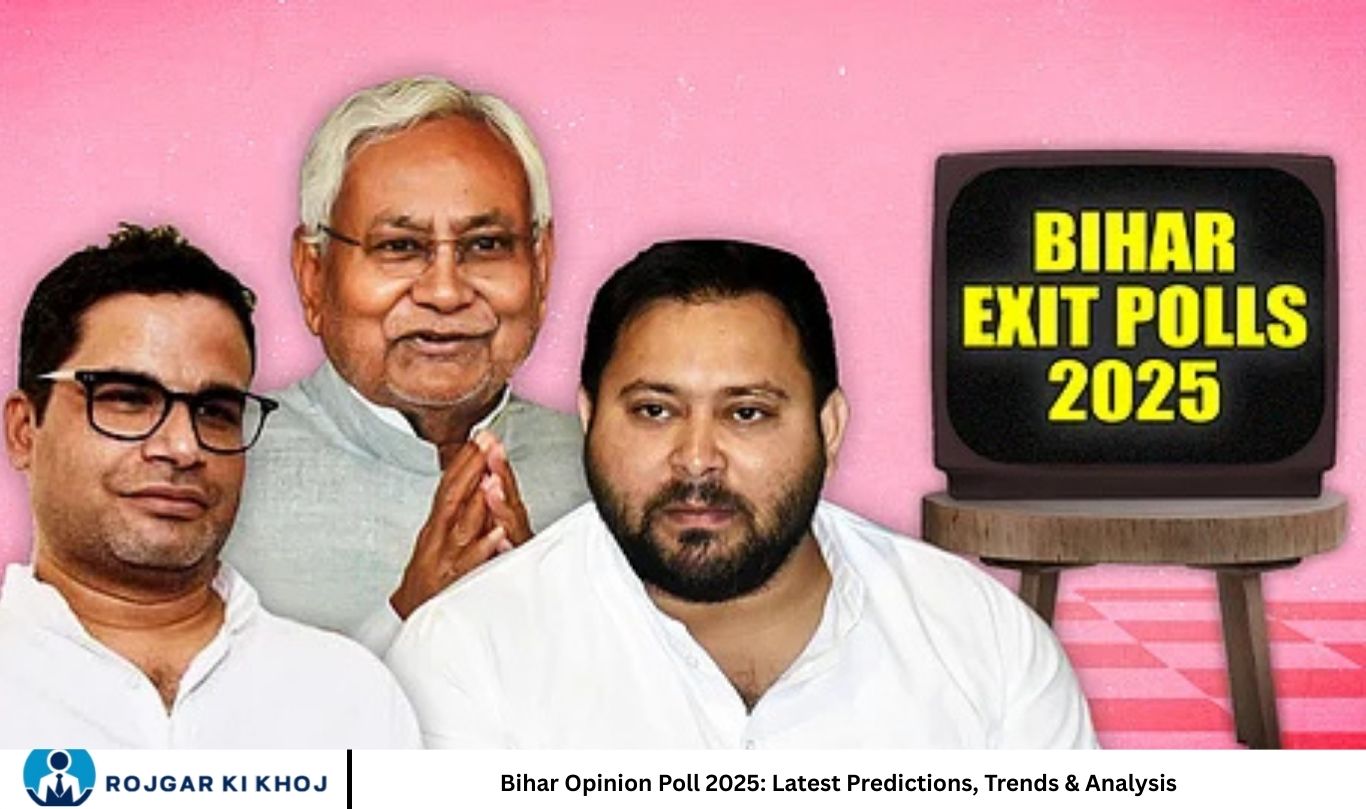
Bihar, one of India’s most politically dynamic states, consistently draws attention during election season. The Bihar Opinion Poll 2025 has become a topic of interest among political analysts, voters, and media outlets alike. With 243 assembly seats at stake, the state’s political landscape is highly competitive. Historical alliances, regional parties, and emerging political narratives are shaping voter sentiment, making it crucial to analyze the latest trends and predictions to understand the potential outcomes of the upcoming elections.
Historical Context: Previous Bihar Election Results
Understanding Bihar’s political history helps contextualize current predictions. Over the last two decades, major parties such as JD(U), RJD, BJP, and the Indian National Congress have fought intense electoral battles. In the 2020 Bihar Assembly elections, the NDA, led by JD(U) and BJP, retained power with a narrow majority. Meanwhile, RJD, despite significant voter support, could not form the government. Factors like voter turnout and caste-based preferences have historically played a decisive role in shaping election results, highlighting the importance of these elements in 2025.
Methodology: How Opinion Polls Are Conducted
Opinion polls rely on rigorous methodologies to predict voter behavior. Agencies conducting the Bihar Opinion Poll 2025 gather data through representative sampling, ensuring both urban and rural populations are included. Detailed questionnaires assess voter preferences, priorities, and approval ratings for political leaders. The collected data is analyzed using statistical models and historical voting patterns to project seat distribution. Most polls include a margin of error, typically 2–3%, which must be considered when interpreting results. Agencies like CSDS, CVoter, and ABP News-CVoter provide comprehensive insights into these trends.
Key Political Players in Bihar 2025
Nitish Kumar and JD(U)
Nitish Kumar, the current Chief Minister and leader of JD(U), has been a cornerstone of Bihar politics for over twenty years. Known for focusing on governance and development, he enjoys significant popularity in rural areas. His policies on infrastructure, education, and law and order remain central to his campaign strategy for 2025.
Tejashwi Yadav and RJD
The RJD, led by Tejashwi Yadav, son of Lalu Prasad Yadav, is gaining traction among backward classes and minority communities. By emphasizing social justice, employment, and youth-oriented policies, RJD aims to regain seats lost in previous elections and position itself as a strong contender against the NDA.
BJP’s Role
As part of the NDA alliance, BJP plays a critical role in Bihar’s political dynamics. With a focus on development, urban governance, and national integration, BJP appeals to urban voters and upper-caste constituencies. Its alliance with JD(U) strengthens its reach across the state, particularly in key urban districts.
Other Regional Players
Smaller regional parties, such as the Rashtriya Lok Samata Party (RLSP) and Hindustani Awam Morcha (HAM), also influence Bihar’s political landscape. While their overall seat share may be limited, they often act as kingmakers in closely contested constituencies, affecting the final balance of power.
Bihar Opinion Poll 2025: Latest Predictions
Recent opinion surveys reveal a competitive political environment in Bihar. The NDA, led by JD(U) and BJP, retains strong support in rural regions and among upper castes. Meanwhile, RJD is gaining momentum, particularly among youth voters, minorities, and backward classes in northern Bihar. Smaller parties and independents are projected to secure a modest number of seats, potentially influencing coalition dynamics.
Analysts estimate the NDA could win between 120 and 135 seats, slightly lower than its 2020 tally. The RJD-led Mahagathbandhan is expected to secure 105–120 seats, reflecting notable gains. Independents and other minor parties may capture 15–20 seats, maintaining a stable influence. These projections are based on current trends, and final results may vary depending on voter turnout and last-minute shifts in sentiment.
Key Trends Shaping Bihar 2025 Elections
Caste and Community Influence
Caste remains a decisive factor in Bihar politics. Groups such as Yadavs, Kurmis, Brahmins, Dalits, and Muslims have distinct voting patterns. However, opinion polls indicate a gradual shift among younger voters, who prioritize employment and governance over traditional caste loyalties, potentially reshaping historical voting patterns.
Development vs. Welfare Debate
Voters are weighing Bihar’s development achievements, such as improved roads, electricity, and education, against welfare schemes like food security and subsidies. Political parties are tailoring their campaigns to emphasize either infrastructure development or social welfare to appeal to specific voter segments.
Urban vs. Rural Voting Patterns
Urban constituencies, including Patna, favor development-oriented agendas, often leaning toward BJP. Rural areas, on the other hand, show stronger support for welfare-focused campaigns by parties like RJD. This urban-rural divide remains a critical factor in predicting election outcomes.
Role of Women Voters
Women are increasingly influential in Bihar elections. Opinion polls suggest that female voters prioritize safety, healthcare, and employment opportunities. Recognizing this trend, parties are introducing policies and campaigns aimed specifically at addressing women’s concerns, making this demographic increasingly decisive.
Impact of National Politics on Bihar 2025
National political sentiment significantly influences state elections in Bihar. Central government policies on agriculture, inflation, and social welfare are closely observed by voters. Anti-incumbency trends at the national level could marginally affect BJP’s performance in the state, whereas JD(U) may benefit from its local governance record. This interaction between state and national politics adds another layer of complexity to predicting Bihar’s election results.
Expert Analysis: Insights from Political Strategists
Political experts highlight several factors that may determine the 2025 election outcome. They emphasize that alliances, rather than individual party strength, will likely be decisive. Swing constituencies, such as Patna, Gaya, and Bhagalpur, are projected to play a pivotal role. Analysts also note that first-time voters and educated youth are increasingly shaping election trends. According to political strategist Dr. Arvind Singh, “Bihar 2025 is less predictable than 2020 due to shifting loyalties and a more informed electorate.”
Challenges in Opinion Poll Accuracy
While opinion polls provide valuable insights, they are not infallible. Response bias can occur when voters do not reveal their true preferences. Sampling errors may skew results if certain demographics are underrepresented. Additionally, political dynamics can change rapidly, with alliances, scandals, or campaign strategies influencing voter sentiment. Despite these limitations, polls remain an essential tool for understanding Bihar’s electoral landscape.
Voter Sentiment and Key Issues in 2025
Employment and Economic Development
Employment remains a top concern, particularly for young voters. Parties promising sustainable growth, skill development, and job creation are likely to attract significant support. Economic stability and policies addressing inflation are also critical factors for voters.
Infrastructure and Governance
Voters prioritize infrastructure development, including roads, electricity, healthcare, and education. Effective local governance and successful implementation of projects often sway undecided voters toward incumbents or parties demonstrating competency.
Law and Order
Safety and governance accountability are major considerations for urban voters. Policies addressing crime rates and ensuring public security play a decisive role in shaping electoral preferences, especially in cities like Patna.
Welfare Schemes
Welfare schemes related to food, housing, and social security continue to impact rural voters. Parties that emphasize inclusive social policies can strengthen support among lower-income households, particularly in backward regions of the state.
Media Coverage and Poll Interpretation
Media coverage significantly shapes public perception of opinion polls. Voters should critically interpret results by considering the credibility of poll agencies, sample size, and margin of error. Trends and overall patterns provide a more accurate picture than individual survey numbers, helping voters understand broader political dynamics.
Frequently Asked Questions
What is the Bihar Opinion Poll 2025?
The Bihar Opinion Poll 2025 is a survey conducted by various agencies to gauge voter preferences and predict possible outcomes of the upcoming Bihar Assembly elections. These polls consider factors like caste dynamics, development priorities, and candidate popularity to project seat distributions.
Which parties are contesting in Bihar 2025 elections?
The major political players in Bihar 2025 include JD(U), RJD, BJP, and the Indian National Congress, along with smaller regional parties like RLSP and HAM. Alliances, particularly NDA (JD(U) + BJP) and Mahagathbandhan (RJD + allies), will play a crucial role in determining election results.
How accurate are Bihar opinion polls?
Opinion polls provide insights based on representative sampling and statistical analysis, but they are not 100% accurate. Factors like response bias, sampling errors, and sudden changes in voter sentiment can affect predictions. Polls should be considered as indicative trends rather than definitive results.
What are the key issues influencing voters in Bihar 2025?
Voters in Bihar 2025 are focusing on issues such as employment opportunities, infrastructure development, law and order, and welfare schemes. Urban voters tend to prioritize governance and safety, while rural voters are influenced more by social welfare and development programs.
How does caste influence Bihar elections?
Caste continues to be a significant factor in Bihar politics. Groups like Yadavs, Kurmis, Brahmins, Dalits, and Muslims have distinct voting patterns. However, recent opinion polls suggest that younger voters are increasingly prioritizing development and employment over traditional caste loyalties.
Conclusion
Bihar Opinion Poll 2025 points to a closely contested election. NDA and RJD are in tight competition, with smaller parties potentially acting as kingmakers. Factors such as caste dynamics, urban-rural divides, youth participation, and governance performance are expected to determine the next government. While opinion polls offer valuable guidance, the actual results will ultimately reflect Bihar’s dynamic and evolving democratic landscape.