
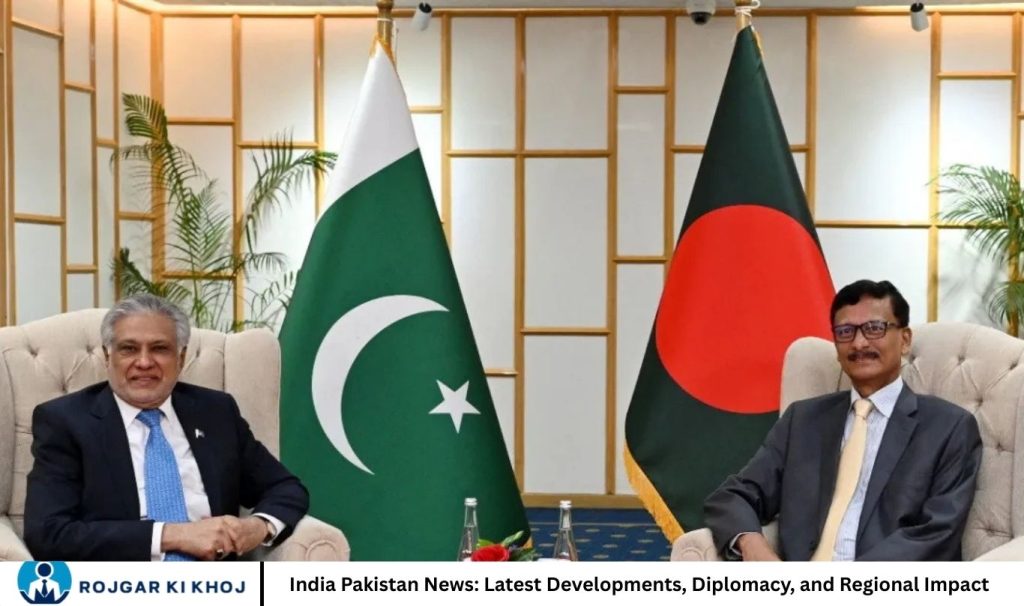
India Pakistan news remains one of the most closely followed and influential topics in global geopolitics. As two nuclear-armed neighbors with a shared history, cultural connections, and long-standing disputes, every development between India and Pakistan has deep implications for peace, security, and economic growth in South Asia. Understanding the trajectory of their relationship helps readers make sense of current news and anticipate future diplomatic developments.This article provides a comprehensive overview of the historical background, recent developments, key challenges, and future outlook of India Pakistan relations in a reader-friendly and SEO-optimized format designed to keep audiences informed and engaged.
Historical Background of India Pakistan Relations
The relationship between India and Pakistan began at a moment of profound upheaval in 1947 when British India was partitioned into two independent states. The partition triggered massive migration and violence, leaving emotional and political scars that still influence diplomatic decisions today. Since independence, the two countries have fought multiple wars, experienced recurring border disputes, and engaged in cycles of tension and reconciliation.The Kashmir conflict remains the most sensitive and complex issue shaping India Pakistan news, but other matters such as water sharing, trade barriers, and diplomatic communication also play critical roles. Over time, news from both countries shows how historical mistrust can slow progress even when the incentive for cooperation is strong. However, the long history also reveals resilience, shared culture, and repeated attempts to rebuild trust whenever conditions allow.
Recent India Pakistan News Highlights
In recent years, both governments have shown cautious willingness to engage diplomatically despite periodic tensions. News reports have highlighted renewed communication between foreign ministries and increased willingness to discuss humanitarian issues such as prisoner exchanges and welfare concerns. These diplomatic moves reflect an understanding on both sides that sustained hostility benefits neither country and that cooperation can unlock major opportunities in trade, security, and regional development.Security news remains a heavy component of India Pakistan coverage, especially developments along the Line of Control and the international border. Incidents of cross-border firing, intelligence disputes, and allegations of militant activity continue to capture attention. Yet, it is equally important to note that both nations have at times reaffirmed ceasefire agreements and explored confidence-building measures designed to reduce tension and avoid escalation. When both governments commit to maintaining peace, citizens on both sides experience measurable improvements in safety and stability.Economic developments also hold significant importance in current news. Analysts repeatedly point out that India and Pakistan have enormous potential to benefit from greater trade and economic exchange, yet political barriers limit progress. News on this topic often reveals how restricted trade reduces growth opportunities, especially in sectors such as agriculture, textiles, and technology. Experts argue that even incremental improvements in trade can foster interdependence and create incentives for long-term peace.
Beyond politics and economics, humanitarian and cultural connections remain powerful forces shaping the relationship. Citizens in both countries share languages, music, food, traditions, and even family links. News highlighting cultural exchange, artistic collaborations, and sporting events demonstrate how people-to-people diplomacy can improve public sentiment even when official diplomacy remains slow.
Key Challenges in India Pakistan Relations
The Kashmir dispute sits at the heart of ongoing diplomatic difficulty. Both governments maintain firm positions, and any policy shift can create strong domestic political reactions. As a result, news narratives around Kashmir often focus on human rights debates, security policy, and governance, all of which influence broader bilateral relations.Cross-border terrorism is another central challenge frequently featured in India Pakistan news. India has long accused Pakistan of supporting militant groups operating in Indian-administered Kashmir, accusations which Pakistan denies. This issue fuels mistrust and remains a key barrier to normalizing relations.Beyond specific disputes lies a deeper psychological challenge: a long-standing trust deficit. Decades of conflict create suspicion even when mutual interests align. This deficit means that symbolic gestures—such as reopening diplomatic channels or reaffirming ceasefires—often carry disproportionate meaning and can significantly influence public opinion and diplomatic progress.
Positive Developments and Future Outlook
Despite challenges, there are encouraging signs for the future. One of the strongest positive trends is the growing connectivity among younger generations in both countries. Through social media, entertainment, and digital communities, young people are forming connections that transcend political boundaries. These interactions can slowly create a culture of understanding and shared aspirations.International diplomacy also plays an important role in pushing both governments toward constructive dialogue. Global economic and security interests make stability in South Asia essential, and foreign partners consistently emphasize the benefits of peace, cooperation, and open trade.Sports and cultural diplomacy also continue to remain effective tools for building goodwill. Cricket matches, film collaborations, and cultural festivals often generate positive emotions and remind citizens on both sides of their shared heritage. These softer forms of diplomacy can influence public sentiment even when political progress is slow.
How India Pakistan News Impacts South Asia
Developments between India and Pakistan extend far beyond their borders. Because both are nuclear powers, any escalation has global security implications, making stability in their relationship essential not just for South Asia but for the international community.
Economically, peace can transform the region. Open trade corridors, shared infrastructure, tourism exchange, and collaborative resource management can unlock growth that benefits millions of people. South Asia has long been described as one of the world’s most promising economic regions, and cooperation between India and Pakistan could accelerate this potential significantly.
At the human level, persistent conflict affects border communities, farmers, families separated by migration, and millions who live under the shadow of diplomatic tension. When news signals progress, even small improvements can have large effects on everyday life for ordinary people.
Expert Recommendations for Improving Relations
Experts repeatedly emphasize that open communication is the foundation of peaceful coexistence. When both countries maintain transparent diplomatic channels, misunderstandings reduce and escalation becomes less likely.Confidence-building measures are also widely recommended as effective tools for gradually rebuilding trust. These can include ceasefire monitoring, easier travel for citizens, cultural exchange programs, and improvements in trade facilitation. Over time, these steps create tangible benefits and foster cooperation.Economic collaboration remains another priority area recommended by analysts. Joint development projects in energy, infrastructure, agriculture, and trade can create mutual benefits strong enough to shift political incentives toward cooperation.Finally, track-two diplomacy involving academics, retired diplomats, and civil society can provide creative solutions when official diplomacy stalls. These unofficial dialogues often explore possibilities that formal negotiations cannot yet address.
Public Sentiment and Media Influence
Public opinion in both India and Pakistan fluctuates significantly based on political events, media narratives, and incidents of violence or cooperation. While governments may take hardline positions, surveys and social media commentary often reveal a genuine desire among citizens for peace and normalcy. Many people on both sides recognize that cooperation can improve quality of life, security, and economic opportunity.Media has a powerful influence in shaping this sentiment. Balanced reporting can promote understanding, while sensationalism can heighten fear and hostility. As audiences consume more digital content, responsible journalism becomes even more critical.
Frequently Asked Questions
What is the current state of India Pakistan relations?
The current state of India Pakistan relations remains cautious and complex. While both countries occasionally engage in diplomatic dialogues and confidence-building measures, long-standing disputes such as Kashmir, security concerns, and mistrust continue to create obstacles. Despite these challenges, there are periodic signs of cooperation in humanitarian, cultural, and diplomatic areas.
Why is Kashmir such a central issue in India Pakistan news?
Kashmir is central because it has been a disputed territory since the partition of 1947. Both countries claim the region, and it has been the cause of multiple conflicts and diplomatic tensions. Developments in Kashmir influence domestic politics, international relations, and security concerns, making it a recurring topic in India Pakistan news.
Do India and Pakistan have trade relations?
Yes, but trade relations are extremely limited compared to their potential. Political tensions, security restrictions, and policy barriers have kept bilateral trade far below what economists believe is possible. However, experts agree that increased trade could significantly boost growth and reduce conflict.
What role does terrorism play in bilateral tensions?
India has accused Pakistan of supporting militant groups operating in Indian-administered Kashmir, which Pakistan denies. These allegations significantly impact diplomatic progress and contribute to distrust. Security issues related to terrorism remain one of the most difficult barriers to normalizing relations.
What positive steps have been taken recently?
Recent positive developments include reopening diplomatic communication, humanitarian dialogues such as prisoner exchange discussions, reaffirmation of ceasefire agreements, and cultural or people-to-people exchanges. Even small improvements can have meaningful effects on public sentiment and long-term diplomatic progress.
Conclusion
India Pakistan news reflects a relationship that is complex, emotionally charged, and deeply consequential. While the challenges are significant, the opportunities for cooperation are equally compelling. Shared culture, economic potential, youthful connectivity, and international support create a foundation upon which future progress can be built.The path to peace requires patience, dialogue, and a willingness to prioritize long-term prosperity over short-term political gains. As citizens and global observers continue to follow news from the region, it is important to remember that every positive gesture—whether diplomatic, cultural, or humanitarian—contributes to building a more stable and prosperous South Asia.
